Why the Beauty Industry Must Rethink Sustainability — A PGF Perspective
From Awareness to Action: Building a Future Where Beauty Heals
The global beauty industry is one of the most powerful cultural forces of our time — worth over USD 600 billion, influencing billions of consumers, and shaping identities across continents.
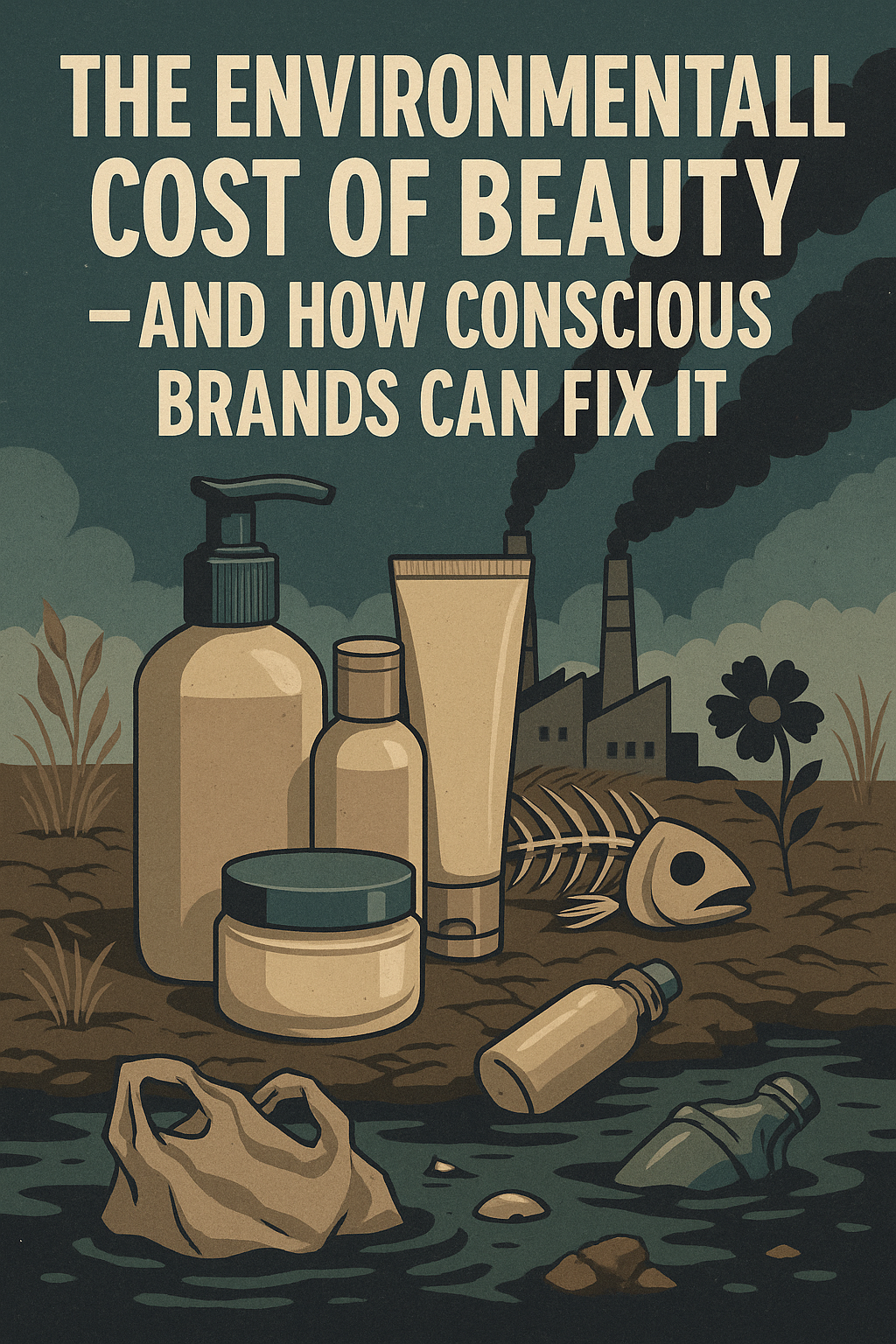
Yet beneath its glamour lies a paradox: the same products that promise confidence often come wrapped in plastic, formulated with petrochemicals, and produced in systems that leave invisible scars on ecosystems and communities.
If there is one sector that can turn sustainability into a lifestyle rather than a policy, it is beauty.
And if there is one moment to act, it is now.
At Pradeep Global Foundation (PGF), we believe beauty can no longer afford to be beautiful only on the surface.
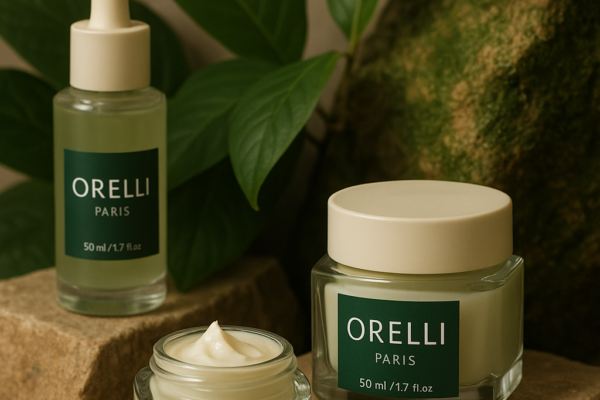
Our initiatives — especially our Orelli Paris sustainable-beauty project — are redefining how responsibility, science, and aesthetics can work together to create measurable global impact.
1. The Problem: Beauty’s Hidden Environmental Footprint
Every moisturizer, lipstick, or serum has a supply chain that touches water, energy, and biodiversity. Consider these facts:
- 120 billion units of beauty packaging are produced every year; most are non-recyclable.
- The cosmetic sector contributes to microplastic pollution through exfoliating beads and glitter.
- Ingredient sourcing — from palm oil to mica — often involves deforestation or unfair labor.
- Marketing drives over-consumption: more products, faster launches, shorter shelf lives.
What begins as a promise of self-care can quickly become a cycle of waste.
True sustainability means re-imagining not only packaging or ingredients but the entire logic of production and consumption.
2. Beyond “Greenwashing”: The New Standard of Authentic Sustainability
In the 2010s, “eco-friendly” labels exploded across shelves. Yet many were cosmetic in name only — changing words, not systems.
The future belongs to verified, measurable sustainability, backed by science and transparency.
This next-generation model includes:
- Life-cycle analysis of every product — from raw material to recycling.
- Low-carbon formulation labs powered by renewable energy.
- Fair-trade sourcing and gender-inclusive employment.
- Consumer education that encourages responsible use and disposal.
This evolution mirrors what France pioneered through its Anti-Waste and Circular-Economy (AGEC) Law and what PGF now adapts for India through the Orelli Paris initiative.
3. France as a Global Example — Where Policy Meets Culture
France’s leadership in sustainability stems from a deep cultural belief: elegance must coexist with ethics.
From the Paris Agreement (2015) to ADEME’s circular-economy programs and the Fondation de France’s environmental philanthropy, the nation has built an ecosystem where public policy, design schools, and luxury brands all align toward green innovation.
This approach doesn’t separate sustainability from beauty — it fuses them.
Form follows conscience.
PGF embraces this philosophy, positioning Orelli Paris as a Franco-Indian collaboration:
- French artistry sets the benchmark of refinement.
- Korean R&D ensures scientific performance.
- Indian action delivers scale and inclusion.
4. India’s Opportunity: Scale Meets Sustainability
India’s personal-care market will exceed USD 30 billion by 2030.
If this growth follows a linear “produce-consume-discard” path, the environmental cost will be enormous.
But if guided by circular-economy principles, India can become the global hub for sustainable beauty manufacturing.
What India Can Do
- Mandate eco-design standards for packaging.
- Incentivize biodegradable and refillable systems.
- Promote women-led green enterprises in rural areas.
- Integrate SDG metrics into brand reporting.
This alignment between policy and entrepreneurship can make India not just the largest beauty market — but the most responsible one.
5. PGF’s Mission: Bridging Global Frameworks with Local Action
Pradeep Global Foundation is one of the few grassroots NGOs in India registered under all 17 UN SDGs.
Our programs span reforestation, clean water, renewable energy, and women’s empowerment.
In the beauty sector, we apply the same holistic lens: economic inclusion, environmental protection, and cultural dignity.
The PGF Philosophy
Sustainability is not optional — it is survival.
By working at the intersection of policy, entrepreneurship, and awareness, PGF acts as a bridge — translating global frameworks (like France’s AGEC Law or the UN SDGs) into local community models.
6. Orelli Paris: The Case Study of Sustainable Beauty
a) Science Meets Responsibility
Orelli Paris formulas combine bio-actives such as collagen, PDRN, vitamin C, and niacinamide in clinically effective yet environmentally gentle concentrations.
They are dermatologically tested, vegan, cruelty-free, and paraben-free, aligning with both EU and Korean safety norms.
b) Packaging That Lasts
Every jar and bottle is made of recyclable glass, packed in minimal, FSC-certified paper.
The design encourages reuse and refill — a step toward SDG 12 (Responsible Consumption & Production).
c) Social Circularity
PGF trains rural women to become beauticians and micro-entrepreneurs, linking beauty to livelihood.
Each purchase thus supports SDG 5 (Gender Equality) and SDG 8 (Decent Work & Economic Growth).
d) Climate Alignment
By producing locally in India under French R&D supervision, Orelli Paris minimizes emissions from logistics — contributing to SDG 13 (Climate Action).
In short: every product is a story of science, sustainability, and social equity — not marketing.
7. What “Rethinking Sustainability” Really Means
For the beauty industry, sustainability isn’t a checkbox — it’s a redesign of identity.
It means shifting focus from new launches to lasting impact.
Old Model | Rethought Model |
Fast product cycles | Timeless formulations |
Plastic dominance | Refillable glass systems |
Celebrity endorsement | Community empowerment |
Marketing promises | Verified performance |
Individual beauty | Collective well-being |
This transformation doesn’t reduce profitability; it redefines it.
Brands that integrate sustainability early earn consumer trust, investor confidence, and policy support.
8. Why NGOs and Brands Must Work Together
Governments set the vision; NGOs ensure inclusion; businesses scale the solution.
A partnership between these sectors — as shown by PGF × Orelli Paris — demonstrates how public trust and private innovation can reinforce each other.
The Three-P Model (People – Planet – Partnership)
- People: training and fair employment.
- Planet: eco-design and emission reduction.
- Partnership: cross-border collaboration (India, France, Korea).
Such models can attract CSR funding, UN-SDG grants, and recognition at forums like COP summits and UN Global Compact events.
9. Consumers as Co-Creators of Change
Sustainability is not only the manufacturer’s duty — it’s a mindset consumers adopt.
Small, consistent choices make systemic change possible:
- Choose products with recyclable or refillable packaging.
- Support brands that disclose their ingredients.
- Use one effective serum instead of five overlapping ones — efficiency is the new luxury.
- Dispose responsibly; participate in take-back or recycling programs.
Orelli Paris advocates conscious minimalism — a philosophy that mirrors France’s “less but better” design ethos.
10. The Embassy & Policy Perspective
Diplomatic missions and development agencies increasingly recognize beauty as a soft-power sector for climate diplomacy.
By supporting initiatives like PGF × Orelli Paris, embassies can:
- Showcase bilateral success stories (France–India).
- Promote gender-inclusive entrepreneurship.
- Encourage sustainable trade frameworks for cosmetics and packaging.
Sustainability, after all, is the new language of diplomacy.
11. The Road Ahead — Beauty as Climate Action
PGF’s next phase focuses on integrating:
- Blockchain traceability for ingredient transparency.
- AI-assisted carbon tracking in packaging.
- Plant-based biopolymers to replace plastics.
- Youth climate-ambassador programs connecting beauty influencers to SDG education.
The goal is simple: turn every beauty purchase into a measurable contribution to planetary well-being.
12. A Call to the Industry: From Imitation to Innovation
Too often, sustainability strategies are reactive — responding to regulations or consumer pressure.
The real leaders will be proactive, embedding ethics and ecology at the design stage.
Five Immediate Steps for Beauty Companies:
- Conduct full life-cycle impact assessments.
- Replace plastic with recycled glass or aluminum.
- Ensure ingredient traceability to fair-trade sources.
- Launch take-back and refill systems.
- Collaborate with NGOs like PGF to link business with SDGs.
This approach transforms sustainability from a cost center to a competitive advantage.
13. Conclusion: The Future of Beauty Is Measured in Impact
The 21st-century beauty industry stands at a crossroads: one path leads to overproduction and ecological depletion; the other, to innovation and regeneration.
France has shown that national frameworks and cultural values can turn sustainability into a lifestyle.
India now has the scale, talent, and urgency to make it universal.
Through Pradeep Global Foundation and Orelli Paris, we see proof that when responsibility meets creativity, beauty can become one of humanity’s most powerful allies in achieving the UN Sustainable Development Goals.
“Travailler pour la nature – Working for Nature.”
The glow of tomorrow will not come from excess — but from ethics.