
Inside the Rise of Sustainable Beauty in India: Orelli Paris as a Case in Point
A Pradeep Global Foundation (PGF) Perspective
Beauty has always been a reflection of culture — and culture, in turn, mirrors the times.
As India steps into a new era of conscious consumption, a quiet revolution is reshaping its beauty shelves. Consumers are no longer asking only what works, but also what matters.
“Sustainable beauty” — once a niche concept reserved for premium boutiques — is now at the center of a global transformation. From ingredient sourcing to packaging and purpose, a new generation of Indian brands is proving that self-care can coexist with planetary care.
At the heart of this movement stands Orelli Paris, a French-formulated, Korean-science-enhanced, and India-driven skincare brand created under the social-innovation framework of the Pradeep Global Foundation (PGF).
1. India’s Beauty Boom Meets Its Sustainability Challenge
India’s beauty and personal-care market is booming — projected to cross USD 30 billion by 2030. Fueled by Gen Z and millennial consumers, this growth is creating opportunity and responsibility in equal measure.
The Numbers Behind the Glow
- Over 500 million Indian consumers now use skincare products regularly.
- The industry generates more than 3 million jobs, many held by women.
- However, it also produces millions of tons of plastic waste annually, much of it non-recyclable.
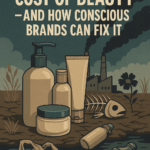
This contradiction — between beauty and waste — defines the sustainability challenge of the decade.
The Shift in Consumer Consciousness
Post-pandemic India has witnessed a sharp rise in eco-awareness. Surveys show that:
- 74 % of Indian consumers prefer products labeled cruelty-free or eco-conscious.
- 68 % are willing to pay more for sustainable packaging.
- 81 % of Gen Z buyers check ingredient transparency before purchasing.
The message is clear: India’s beauty future must be ethical, effective, and ecological.
2. The Global Influence: France, Korea, and the Clean Beauty Revolution
Two nations have shaped the global skincare revolution — France and South Korea.
- France taught the world that luxury and responsibility can share the same bottle.
- Korea introduced a culture of scientific innovation, clinical precision, and transparency.
By combining these philosophies, PGF envisioned Orelli Paris as an Indo-French-Korean bridge:
- French elegance defines the aesthetic and sustainability ethos.
- Korean R&D ensures high-performance, skin-safe innovation.
- Indian manufacturing provides scale, affordability, and inclusivity.
This tri-nation synergy positions Orelli Paris as more than a brand — it is a model for sustainable globalization.
3. Defining Sustainable Beauty — Beyond the Buzzwords
In India, “sustainability” in beauty is often misunderstood as simply organic or natural. True sustainable beauty goes much deeper — addressing both ecological and social impact.
According to PGF’s sustainability framework, the pillars are:
Pillar | Focus Area | Impact |
Environment | Eco-friendly packaging, carbon reduction, biodegradable formulas | Protects ecosystems and resources |
Social Equity | Women empowerment, local sourcing, fair wages | Creates inclusive livelihoods |
Innovation | Scientific R&D, responsible actives, digital transparency | Builds trust and progress |
Culture | Heritage + modernity balance | Aligns beauty with ethics |
Orelli Paris operates at this intersection — making it a living example of beauty with a conscience.
4. The Orelli Paris Model: Sustainable Beauty, Designed in France, Empowered in India
Orelli Paris, developed under the guidance of J.B. SARL (France) and PGF, merges art, science, and social purpose.
a) Responsible Formulations
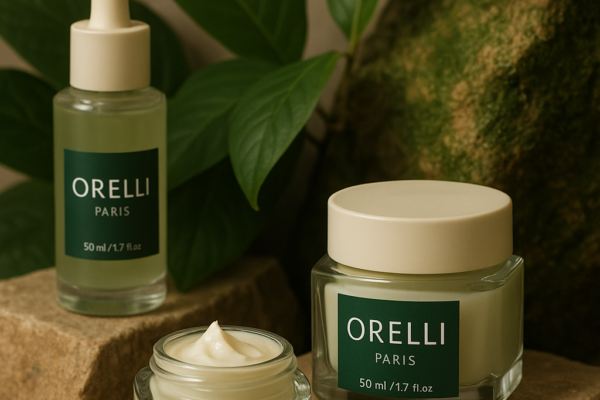
Each product — from the Retinol Collagen Advanced Cream to the PDRN Collagen Jelly Cream and 24K Gold Elixir Serum — is formulated for maximum efficacy with minimal environmental impact.
- No parabens, mineral oil, or sulfates.
- Cruelty-free and vegan.
- Bio-active ingredients sourced from certified suppliers under EU REACH and KFDA standards.
b) Circular Packaging
Orelli’s containers are glass, not plastic — designed for reuse and recycling.
Outer boxes use FSC-certified recycled paper and soy-based inks.
Refill options and take-back systems are under development, aligning with SDG 12 (Responsible Consumption & Production).
c) Social Impact
Under PGF’s Women for Nature program, rural women are trained as beauticians, small-scale distributors, and sustainability advocates.
This initiative links SDG 5 (Gender Equality) with SDG 8 (Decent Work & Economic Growth).
d) Transparent Collaboration
Every label reads:
“Formulated in France 🇫🇷 — Next-Gen Korean Skin Science 🇰🇷 — Made with Indian Responsibility 🇮🇳.”
This line encapsulates the Orelli promise — global quality, local integrity.
5. Why Orelli Paris Stands Out in the Clean Beauty Landscape
In a market crowded with “green” claims, Orelli Paris distinguishes itself through evidence and ethics.
Aspect | Typical Brand | Orelli Paris |
Packaging | Plastic jars, laminated boxes | Recyclable glass, minimal paper |
R&D | Marketing-driven trends | Science-driven actives (PDRN, 377, Vitamin C, Peptides) |
Sustainability | Surface-level claims | NGO-aligned measurable SDG metrics |
Manufacturing | Outsourced anonymously | Transparent Indo-French collaboration |
Social Impact | Often absent | Women livelihood integration via PGF |
This unique ecosystem allows Orelli Paris to operate not only as a skincare brand but as a catalyst for sustainable enterprise in India.
6. PGF’s Role: Making Beauty a Development Sector
Pradeep Global Foundation works on the premise that sustainability is a collective ecosystem, not a corporate checklist.
Through Orelli Paris, PGF demonstrates how the beauty sector can directly contribute to national and global development goals.
PGF’s Impact Areas in Sustainable Beauty
- Skill Development: Beauty training centers for women and youth.
- Climate Awareness: Campaigns on sustainable packaging and river clean-ups.
- Sustainable Enterprise: Linking artisans and MSMEs to eco-beauty supply chains.
- Global Cooperation: Partnerships with French institutions like AFD, ADEME, and Fondation de France.
Together, these programs transform the beauty industry from a market into a movement.
7. The Broader Context: Aligning with the UN SDGs
The rise of sustainable beauty directly accelerates multiple UN Sustainable Development Goals (SDGs):
Goal | How Beauty Contributes | PGF/Orelli Paris Example |
SDG 3 — Good Health | Safe, toxin-free skincare | Dermatologically tested, vegan products |
SDG 5 — Gender Equality | Women entrepreneurship | PGF rural beautician program |
SDG 8 — Economic Growth | Green jobs, MSME empowerment | Local packaging artisans |
SDG 12 — Responsible Consumption | Refill, recycle, reuse | Orelli glass packaging |
SDG 13 — Climate Action | Carbon footprint reduction | Local manufacturing |
SDG 17 — Partnerships for Goals | International collaboration | France–India–Korea model |
This integration ensures that every Orelli Paris product is a small but real act of global citizenship.
8. Consumer Power: The New Era of Conscious Choice
Sustainability is no longer a niche trend — it’s a consumer expectation.
Today’s Indian buyers, especially Gen Z, are activist consumers: they demand transparency, inclusivity, and purpose.
What They’re Asking For
- “Where are my ingredients sourced?”
- “Is this packaging recyclable?”
- “Does this product empower anyone beyond me?”
By answering these questions clearly, brands earn trust and long-term loyalty.
Orelli Paris’s packaging transparency and PGF’s NGO association appeal to this generation’s values: authenticity, purpose, and global awareness.
9. How France’s Circular-Economy Approach Inspires India
France’s AGEC Law (2020) — banning unsold goods destruction and single-use plastics — provides a roadmap for India’s policymakers and entrepreneurs.
PGF advocates for a similar Circular Beauty Framework in India, centered on:
- Refillable packaging systems.
- Recycled material targets for cosmetic brands.
- Tax incentives for sustainable design.
- NGO partnerships for consumer education.
Orelli Paris, by integrating these principles early, positions itself as a French-standard brand built for Indian realities.
10. The Role of Embassies and Development Partners
Sustainable beauty is also soft diplomacy — it blends economic cooperation with environmental ethics.
Through Orelli Paris, PGF invites partnerships with:
- French Embassy in India / AFD – for technical and knowledge exchange.
- EU sustainability councils – for packaging and R&D collaboration.
- CSR foundations – to co-sponsor women training and green manufacturing.
Such cooperation transforms beauty from a consumer product into a tool of development diplomacy.
11. Looking Ahead: The Future of Sustainable Beauty in India
The future will belong to brands that integrate:
- Bio-based ingredients (marine collagen, plant peptides).
- Digital transparency (QR codes showing carbon footprint).
- Inclusive ecosystems (local artisans, women-led co-ops).
- Global ethics with local affordability.
PGF’s roadmap for the next five years includes:
- Launching a PGF Sustainable Beauty Council with academic and industry partners.
- Setting up a Women’s Green Beauty Accelerator for rural entrepreneurs.
- Hosting an Indo-French Clean Beauty Dialogue in New Delhi and Paris.
Orelli Paris will remain the case study brand — proving that sustainability can shine as brightly as any luxury logo.
12. Conclusion: India’s Time to Lead
India’s rise in the global beauty landscape isn’t just commercial — it’s philosophical.
The world is watching how a country rooted in Ayurveda, diversity, and innovation redefines modern sustainability.
Orelli Paris, through PGF’s vision, shows what that leadership looks like: luxury with purpose, innovation with empathy, and progress with accountability.
“Travailler pour la nature – Working for Nature.”
The glow of India’s sustainable beauty movement has begun — and it carries the light of both Paris and the Ganga.